

| 名稱 | Human ADORA3 Ga15/CHO |
| 型號 | CBP71338 |
| 報價 |  |
| 特點(diǎn) | Human ADORA3 Ga15/CHO 凍存條件:90% FBS+10% DMSO |
產(chǎn)品搜索
相關(guān)文章
- PLoS ONE:科學(xué)家發(fā)現(xiàn)癌癥轉(zhuǎn)移的新線索
- 【產(chǎn)品推介】TERT診斷標(biāo)準(zhǔn)品
- 抑制性檢查點(diǎn)靶點(diǎn)及其細(xì)胞篩選模型
- 【靶點(diǎn)模型+診斷質(zhì)控】c-Kit常見突變的藥物開發(fā)和診斷
- ATCC細(xì)胞的細(xì)胞破碎
- PIM-1激酶抑制劑細(xì)胞篩選模型
- 從“腫瘤免疫療法”發(fā)展,看“單抗、CAR-T”任重而道遠(yuǎn)!
- FLT3標(biāo)準(zhǔn)品簡介
- 大腦中新發(fā)現(xiàn)的一種淋巴細(xì)胞,能夠清除大腦廢物
- DPCR檢測試劑盒開發(fā)性能驗(yàn)證
聯(lián)系我們
聯(lián)系人:蔣經(jīng)理
電話:4008750250
號碼:
手機(jī):18066071954
地址:南京市棲霞區(qū)緯地路9號
Email: zhangxiangwen@cobioer.com
電話:4008750250
號碼:
手機(jī):18066071954
地址:南京市棲霞區(qū)緯地路9號
Email: zhangxiangwen@cobioer.com
產(chǎn)品展示 / PRODUCTS
藥靶細(xì)胞株 > GPCR細(xì)胞株 > CBP71338Human ADORA3 Ga15/CHO
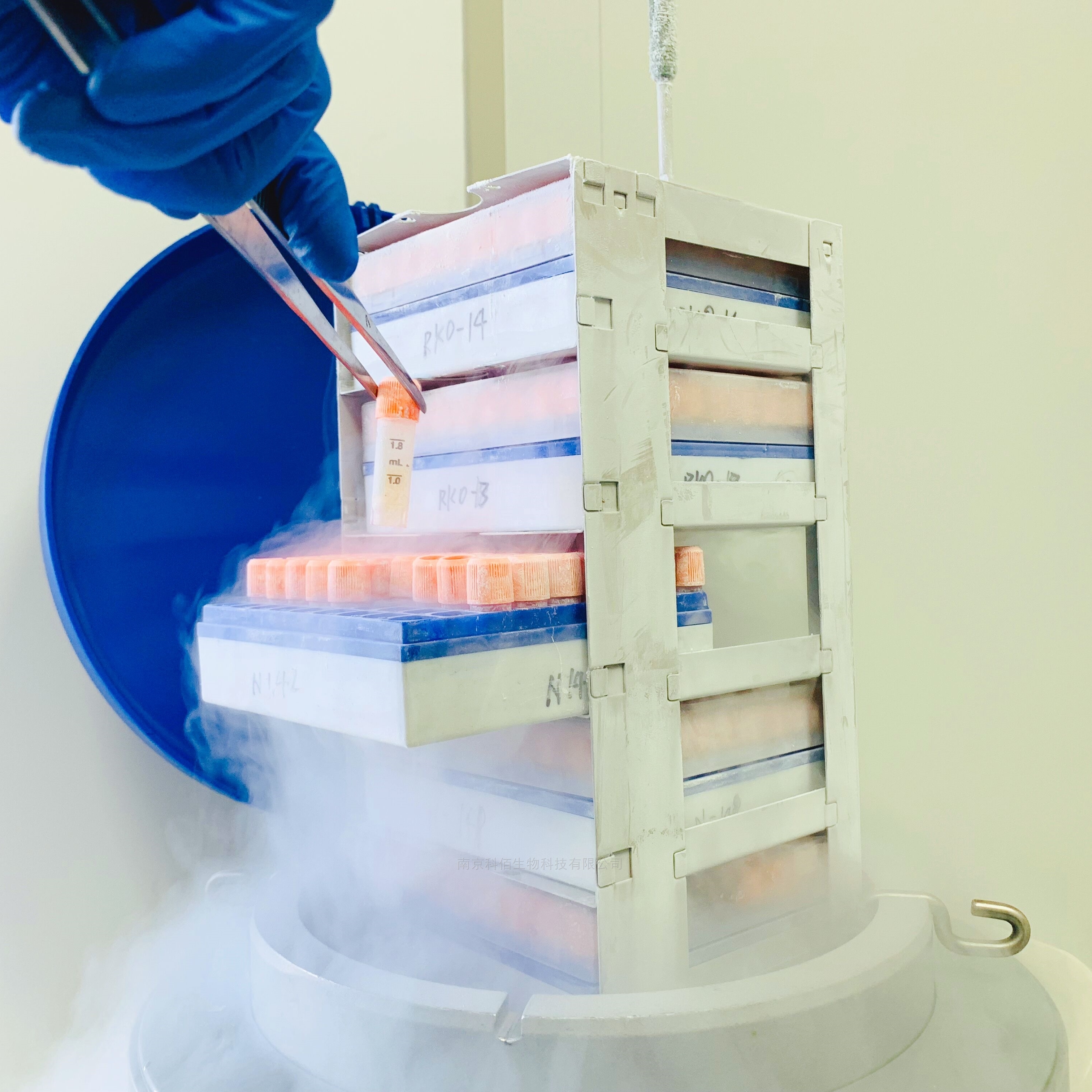
- 詳細(xì)內(nèi)容
| CBP71338 | |
| I. Background | |
Extracellular adenosine mediates a multitude of biological effects, including wakefulness, antiarrythmia, bronchoconstriction and response to ischemia and oxidative stress. A family of four G-protein coupled adrenoceptors, A1, A2A, A2B and A3, is responsible for these effects. A3, which couples to Gi/o, is expressed in a wide range of human tissues, but most predominantly in the lung and liver. Recent animal model studies have shown that A3 receptors play important roles in brain ischemia, immunosuppresion, and bronchospasm. A3 receptor agonists and/or agonists may have important clinical value in the treatment of asthma and inflammation. Mice lacking A3 receptors display reduced mast cell degranulation and bronchoconstriction in response to adenosine. | |
| II. Introduction | |
| Host Cell: | CHO |
| Stability: | 20 passages (in-house test, that not means the cell line will be instable beyond the passages we tested.) |
| Freeze Medium: | 90% FBS+10% DMSO |
| Culture Medium: | F12K+10% FBS+2 μg/ml puromycin+ 100 μg/ml Hygromycin B |
| Mycoplasma Status: | Negative |
| Storage: | Liquid nitrogen immediately upon delivery |
| Application(s): | Functional assays for ADORA3 receptor |
| Transducer: | Gi |
| Ⅲ. Description of Host Cell Line | |
| Organism: | Hamster |
| Tissue: | Ovary |
| Morphology: | Epithelial |
| Growth Properties: | Adherent |
| Ⅳ. Representative Data | |

